
Hanna D.
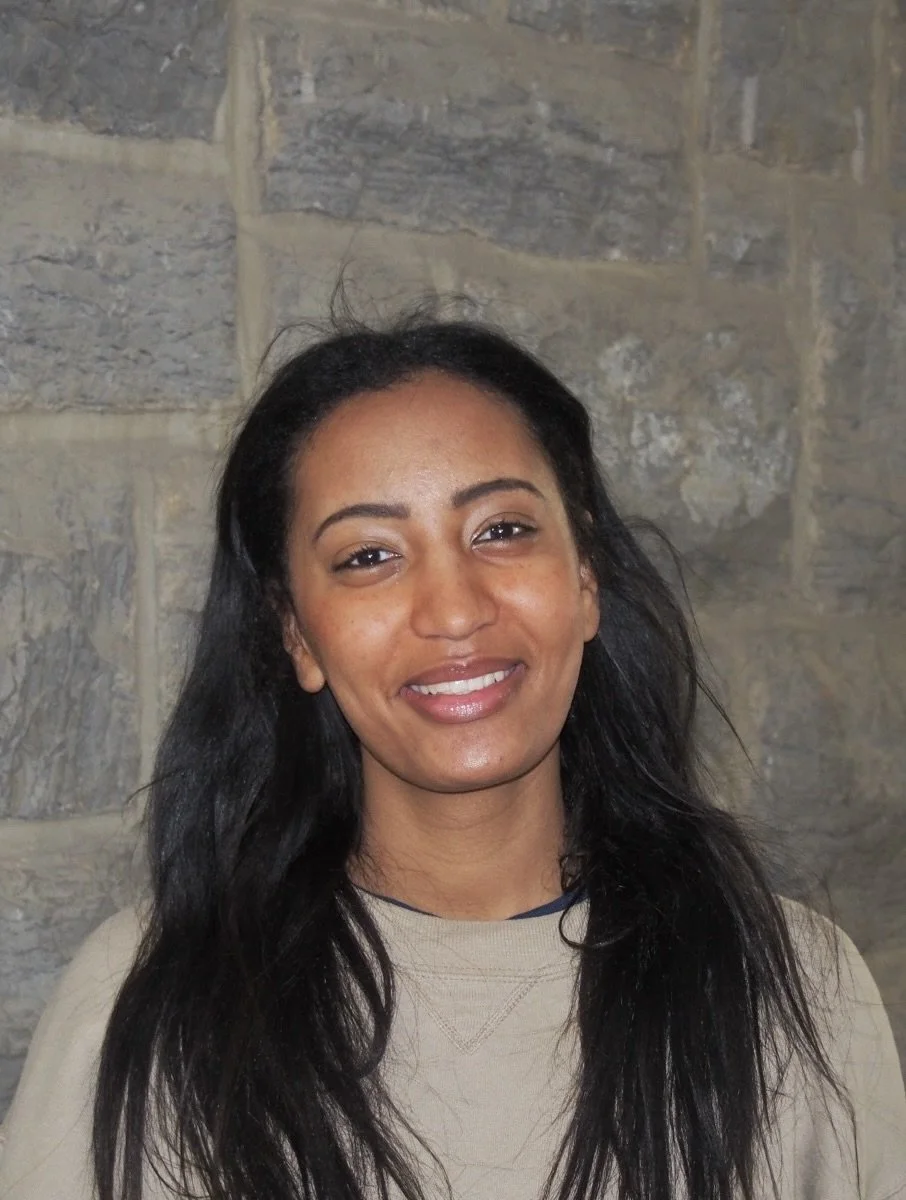
Photography by Oviya Dass
If you’re reading this, recognize the importance of community and the role you play in building one.
When my parents first immigrated to Richmond, Virginia, they had nothing except for the clothes on their backs and my older brother, Daniel. Naturally, they moved to Southside, one of the cheapest areas in RVA. It was cheap for a reason: gunshots, rodents, and robberies were common. Yet living in Southside was still multitudes safer than the Sub-Saharan and East African deserts where they had spent years camping out as refugees. Education, food stamps, free speech, and healthcare were easy to come across in the United States. My parents were lucky to even leave Africa alive. My eldest brother wasn’t as fortunate.
Following the standard “American Dream,” through hard work and exaggerated frugality, my parents immediately worked on getting out of Southside. And they did so quickly. I was fortunate enough to spend most of my life in Lakeside, a suburb located on the Northside of Richmond City. I went to three elementary schools in the span of living in the same house. All were predominantly black and Hispanic. I could feel an unspoken divide between black immigrants and Black Americans who are generations removed from Africa. However, the black and Hispanic community always remained welcoming and offered comfort through music, great food, and genuine human interactions. Endearing nicknames and gentle hugs were a given with both of these groups of people.
Transitioning to middle school, I was in for a surprise when half of the school was white and the other half were people of color. Some of my friends lived over 20 minutes away from the middle school and commuted for the I.B. program we were in, while some of my friends lived near the school and weren’t as financially safeguarded. It was almost as if I had two different personalities at the same school. And while I never pretended to be something I wasn’t, I found that the two groups of people I surrounded myself with had different perspectives on life. Perspectives that definitely shaped me into the person I am today. At this point in time, I was taking music more seriously. My parents were adamant about me taking double bass lessons as they wanted me to live out a childhood spending time doing the things I love.
I was in a speciality center in high school, so I spent my days learning about medical sciences with predominantly Indian and other Asian students, but my high school was predominantly white. While I didn’t face an identity crisis, it was mentally taxing to a certain degree to not see a lot of people that looked like me in an academic setting. My middle school did a great job of shifting my mind to adapt to the “proper social cues” for this environment, but I was much more aware of not fitting in at this point in time. It was hard not to notice. However, the desire to conform was never prevalent in my mind. I wore thrifted and beat up clothes, but the only person I sought to impress was myself. Again, I pushed myself to become knowledgeable in music and began interacting with people outside of my school. People from the inner depths of the city with wisdom and culture that I truly resonated with. We’d sit around and listen to music and thrift and attend music events in Richmond. It was a diverse group of people and I realized I subconsciously thrived in these environments because of my unique upbringing. I now chase this feeling of comfort provided through companionship in every setting I come across.
Fast forward to Virginia Tech, I found myself longing for community once again. I rushed a Panhellenic sorority and the chemistry fraternity my freshman year and came to love the people in both groups. I fell in love with the people in these organizations and ended up taking executive roles for them. However, I wanted to incorporate my passion for music into a community somehow. I minored in jazz freshman year, but didn’t feel fulfilled. And so I began DJing my freshman and sophomore years. I played at venues downtown and smaller house shows, but I knew I could do more.
Ouithevillage, a music collective based out of Blacksburg, stumbled across me my junior year. There I was, DJing in a basement, and little did I know that I would meet one of the groups that I had been subconsciously looking for all along. On paper, none of us really look like we’d be friends. In person? They are genuinely some of the coolest and authentic people I’ve ever met – some of my best friends for life. We spend our time talking about new album releases, experimental UK rap, selvedge denim, pop culture issues, and everything in between. A lot of our interests and music tastes differ, but we are all intricately interwoven by our desire to expand our perspectives and hang out with people who enjoy variants of noise. And through this collective, I’ve met friends of friends who smile at me as I go to class or fist bump me as I’m DJing in a booth. Or on the way to class. Or grabbing coffee. There is a warmth that goes through my body when someone recognizes me, feels safe enough to approach me, and strikes up a conversation. People long for community, and I’m very happy that I’ve found multiple at Virginia Tech.
While Ouithevillage stumbled upon me, there is a lot of value in being willing to put yourself out there. And I could argue that I did that by DJing. Circumstantial acquaintances are coincidental. This doesn’t speak to the value nor the strength of the relationships, but there is an inherent beauty in seeking out a close bond intentionally. And it doesn’t have to be something as drastic as DJing. Cracking a joke in class. Telling a passerby you like their outfit. Asking someone to hang out via Instagram DMs. All of these are simply ways to communicate what you want: you want to acknowledge that person, and you want that person to acknowledge you. This can prove to be difficult for introverted people but even stopping by a band show and meeting one new person there can introduce you to friends of a lifetime. With the rise of social media, universities and bigger cities can seem daunting. Everyone seems so much cooler and unreachable online. At the end of the day, we are all people. And people form communities. And communities are not inside or outside, but all around.
There is strength in numbers, but there is stability in meaningful relationships. I do well in a variety of settings due to my diverse upbringing and willingness to learn about those around me. I like to hear about what excites people. And the mundane 9-5 internships that people worked over the summer. And the significance of a song in a person’s life. Accepting that you are a collection of everything around you allows you to naturally curate a group of people that seeks human interaction. That’s what I provide in a community. I’m the linkage friend – introducing one person to another person based on a tiny detail they mentioned a year ago and seeing a friendship blossom is always a rewarding feeling. And then that friend introduces the friend to another friend. The pattern is ongoing. And as the undefined group grows, people are exposed to different races, genders, socioeconomic statuses, educational levels, and creative outlets. You’ve now expanded your horizons and your life’s experiences just through being able to hold a conversation.
Funny enough, I don’t believe a community necessarily has to have concrete ideals or interests in common. I believe that community has to be a common space of love, communication, and an intense hunger to grow together. Growth tends to occur creatively, academically, or mentally. And with this growth comes an interwoven group of people that enjoy spending time together. The success of a community is determined by the individualistic nature of those who are a part of it. This doesn’t refer to how you treat others, but rather how you think.
You should never try and fit in. To this day, I don’t feel like I really fit in anywhere. And I wouldn’t have it any other way. People tell me at least once a week “I’m really surprised you’re in a sorority; you don’t seem like the type.” And I also receive “I would’ve never thought you majored in tough subjects; you don’t seem like the type.” Well, you are correct. I am not “the type.” I am Hanna Dingo. I don’t like to be put in a box based on my race, gender, my accent, or how I dress. Every culture I’ve encountered in my upbringing has shaped me in some way. There is no genre of music that remains untouched, no group of people too different from me to befriend, and no ideas that creative mutuals throw out that I won’t entertain.
Stay true to yourself on these streets. Because if not you, then who?
Hanna D., Virginia Tech
Connect With Us
To follow IfYoureReadingThis at Virginia Tech on Instagram, get in touch with our chapter, and learn about more resources available to Virginia Tech students, visit our chapter’s homepage.
AUTHOR CONTACT
This author has opted to allow readers who resonate with their story to contact them. If you would like to speak to the author of this letter about their experience, please use the form below.
