
Julia A.
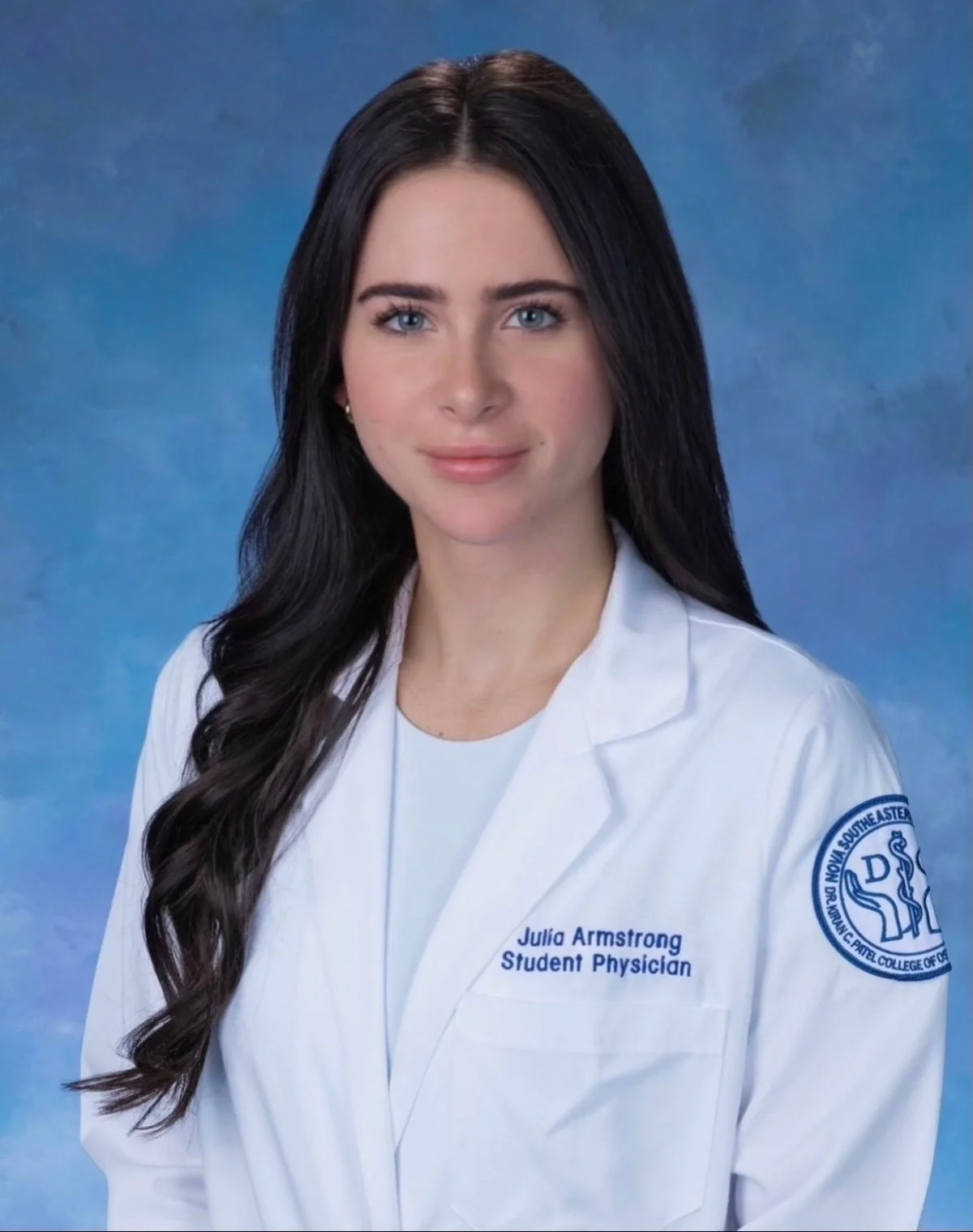
Photo provided by Julia A.
If you’re reading this, remember: feeling behind doesn’t mean you’re failing.
Before starting medical school, most of my fears centered around the workload—whether I’d have the stamina to keep up good grades while balancing research, extracurriculars, and time with friends. What I didn’t anticipate was the mental weight of feeling behind or constantly comparing myself to other students. Especially early on, when everything feels new and uncertain, it’s easy to look to others for reassurance—what they’re doing, how they’re studying, how they seem to be managing it all. And without realizing it, comparison creeps in and turns into the question: am I doing enough, or am I falling behind?
The truth is: it’s okay to feel behind in medical school. When you’re staying on top of classes, you feel behind in research. When you’re managing both, boards studying starts to feel neglected. The to-do lists never stop growing—every time you check something off, another task appears. That’s part of the journey and part of the training. You’re learning more than medicine; you’re learning how to compartmentalize, how to manage multiple stressors, and how to stay focused when things feel overwhelming. Somewhere along the way, you also start building confidence in yourself and your ability to handle it.
Not every study method works for everyone, and that’s okay. Not every journey looks the same, and that’s okay too. You were given a spot in your class for a reason. Let yourself enjoy the process when you can, and don’t forget to make time for yourself along the way.
If you’re reading this, breathe. You’re doing more than you give yourself credit for. Count your wins—not just your losses. Everyone’s path looks different, and that variability is what makes you you, not less than.
Julia A., Third Year Medical Student
Q: How do you cope with the stressors of medical school?
A: I cope with the stressors of medical school by intentionally planning time for myself and leaning on my support system. Even something as simple as scheduling a dinner with a friend helps me have something to look forward to and reminds me that I am more than just a medical student. My best friend is a year ahead of me in training, and being able to talk with her about what to expect has significantly alleviated the stress that comes with the uncertainty of medical education.
Q: How did you manage the stress of preclinical training, such as learning high volumes of detailed information and increased levels of competition?
A: During preclinical training, I learned that it was okay to feel unsure at the beginning and to experiment with different study methods. Medical school learning is very different from prior schooling due to the volume and depth of material, and there is no single way to prepare for it. I found it important to accept that uncertainty and focus on finding what worked best for me rather than constantly comparing myself to others. Third-party resources, especially online video platforms, were particularly helpful for my learning style. Sticking with a method that worked for me helped reduce unnecessary stress.
Q: How do you/did you manage the pressure of clinical training, such as frequently changing environments and balancing clinical performance with studying for shelf exams?
A: Clinical training comes with frequent changes in environment and expectations, which can be stressful. One of my most effective coping strategies has been maintaining a schedule. However, I’ve learned that flexibility is essential during rotations, as schedules often change monthly. Instead of a rigid schedule, I use a flexible daily schedule. For example, regardless of the time of day, I try to complete a UWorld block and incorporate movement, whether that’s going to the gym or taking a walk. This approach helps me stay grounded while balancing clinical responsibilities and studying.
Several studies have revealed that medical students, physicians, and healthcare professionals experience mental health symptoms at rates significantly higher than the general population. Stethos[Cope] is a chapter of IfYoureReadingThis designed to help medical students and professionals cope with the unique stressors of medical training and change the narrative of mental health in medicine.
To read more letters and interviews from students, and to learn more about mental health in the medical community, visit the Stethos[Cope] home page.