Charis T.
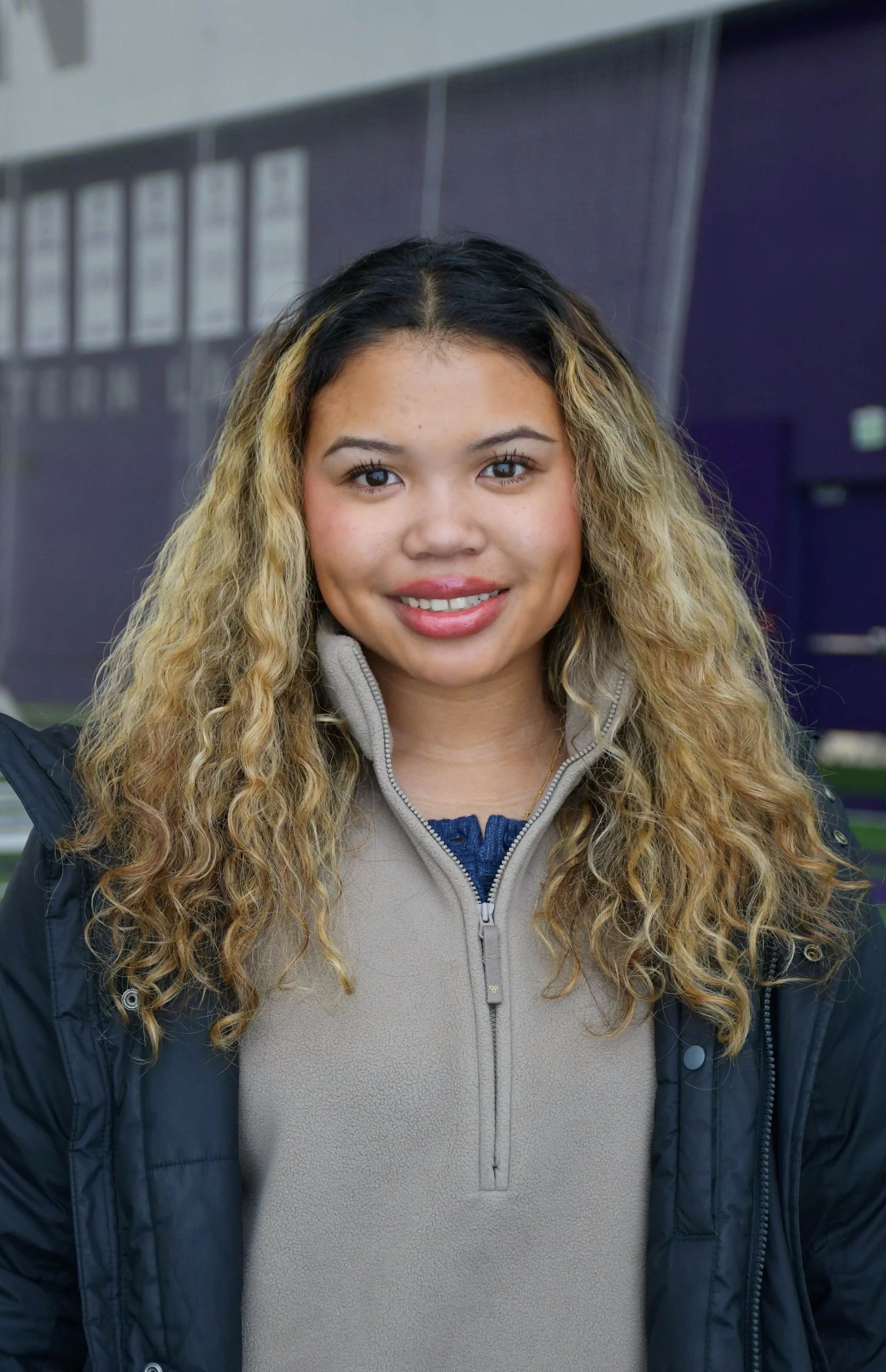
Photography by Isa Vivona
If you’re reading this, your story doesn’t end when the plan changes.
On paper, studying Economics with a minor in Business Institutions might suggest a traditional, numbers-driven path, but the truth is, economics is not where I imagined myself ending up for most of my life. I arrived here through a much more human, nonlinear journey rooted in sport, resilience, and storytelling.
For most of my life, soccer shaped how I understood effort, identity, and purpose. Growing up, I was naturally shy and soft-spoken, someone who often struggled to take up space or feel confident expressing herself. Soccer became the place where that changed. On the field, I felt free to perform, to lead, and to communicate without hesitation. It gave me a space where confidence was built through action, trust, and repetition. Over time, the confidence I developed as an athlete followed me off the field, shaping how I showed up as a teammate, a leader, and eventually a mentor.
I was a member of the Northwestern women’s soccer team from my freshman through junior year, and although I had hoped to finish my collegiate career on the field, I had to medically retire my senior year after six knee surgeries over the last eight years. From high school through college, my relationship with the game was marked by long stretches of rehabilitation, uncertainty, and the emotional challenge of redefining who I was when I couldn’t play.
What surprised me most during that period was not the physical toll, but how deeply I began to understand the power of support, communication, and narrative. As I navigated surgeries and recoveries, I found myself helping younger athletes with recruiting decisions, connecting teammates and players in my area to surgeons and medical resources, and mentoring athletes through ACL and knee injuries I knew all too well. In doing so, I realized that helping people was never about “fixing” them physically, it was about helping them feel seen, understood, and empowered.
For a long time, I believed that path would lead me into physical therapy or kinesiology. But as I gained more coaching experience and worked closely with athletes navigating recruitment, setbacks, and self-doubt, I began to see another form of impact. I saw how critical it is for people, especially performers, athletes, and creatives, to understand their own value and communicate it effectively. Recruiting taught me that talent alone is never enough; it must be translated, framed, and shared in a way others can connect to.
That realization ultimately led me to economics and business, not as abstract theory, but as tools for storytelling, strategy, and sustainability. This past fall, with permission from my head coach, I remained with the team as a student coach, shifting my role from performer to mentor and advocate. In that position, I learned how to motivate, communicate across personalities, and help others perform with confidence, skills that translate far beyond sports.
Charis T., Northwestern University
Connect With Us
To follow IfYoureReadingThis at Northwestern on Instagram, get in touch with our chapter, and learn about more resources available to Northwestern students, visit our chapter’s homepage.
AUTHOR CONTACT
This author has opted to allow readers who resonate with their story to contact them. If you would like to speak to the author of this letter about their experience, please use the form below.